
Transparent PLA opens new possibilities for creating clear and light-transmitting 3D printed parts. Unlike standard PLA filament, this highly crystalline formulation delivers enhanced clarity, controlled light diffusion, and semi-optical transparency — making it suitable for both functional and aesthetic applications.
What sets Transparent PLA apart is its tunable appearance. The final visual result depends primarily on wall thickness, perimeter count, infill density, and extrusion temperature. Thin walls and low infill allow greater light transmission, while additional perimeters or higher internal density create a softer, frosted effect. Printing at the higher end of the recommended temperature range improves interlayer bonding, helping extrusion lines visually merge for smoother and clearer surfaces.
FormFutura Transparent PLA is engineered for precise and reliable FDM/FFF 3D printing. Its optimized material flow ensures consistent extrusion, excellent dimensional accuracy, and stable performance — even when printing detailed geometries. Combined with food contact approved raw materials and 100% biobased composition, it offers a balance of optical performance, printability, and sustainability for professionals and advanced makers alike.
In this guide, we explore how Transparent PLA works, how to optimize clarity through print settings, and where its optical properties deliver the most value.
What is Transparent PLA?
Transparent PLA is a highly crystalline polylactic acid filament developed to enhance light transmission compared to standard PLA. Traditional PLA is typically opaque due to pigments and internal microstructure. Transparent PLA minimizes light scattering within the material, allowing for controlled translucency and improved clarity.
Unlike fully transparent engineering plastics such as polycarbonate, Transparent PLA produces semi-optical transparency. Light passes through the material while still interacting with printed layer structures, creating a balance between clarity and diffusion.
Because FDM printing builds parts layer by layer, microscopic interfaces between extruded strands influence how light travels through the object. When wall settings are optimized and thermal bonding is sufficient, these boundaries become less pronounced, resulting in smoother visual transitions. Increasing wall thickness or internal density, however, introduces additional interfaces that scatter light and create a frosted appearance.
Transparent PLA vs Standard PLA
The key differences include:
- Designed for light transmission rather than opacity
- Enhanced crystallinity for improved clarity
- Tunable surface appearance through wall and infill control
- Better suited for light-diffusing and inspection applications
Transparent PLA retains the ease of printing associated with PLA while offering optical versatility not typically found in standard consumer filaments.
How to Make PLA More Transparent and Control Its Optical Appearance
One of the defining advantages of Transparent PLA is that its appearance is not fixed. By adjusting wall thickness, infill density, and extrusion temperature, you can deliberately control how much light passes through the printed part.
Transparency is largely determined by how much material light must travel through and how effectively adjacent extrusion lines fuse together. Every additional perimeter and internal structure creates interfaces where light refracts or scatters.
Wall Thickness: The Primary Transparency Factor
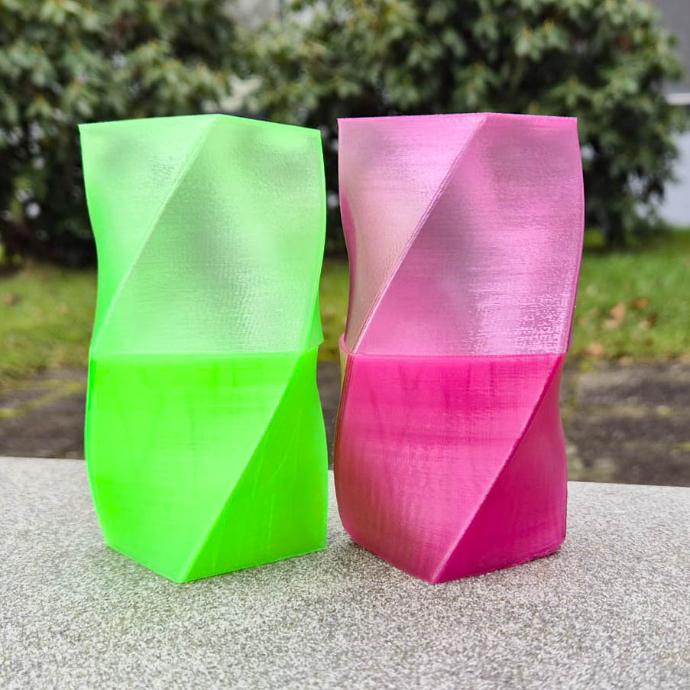
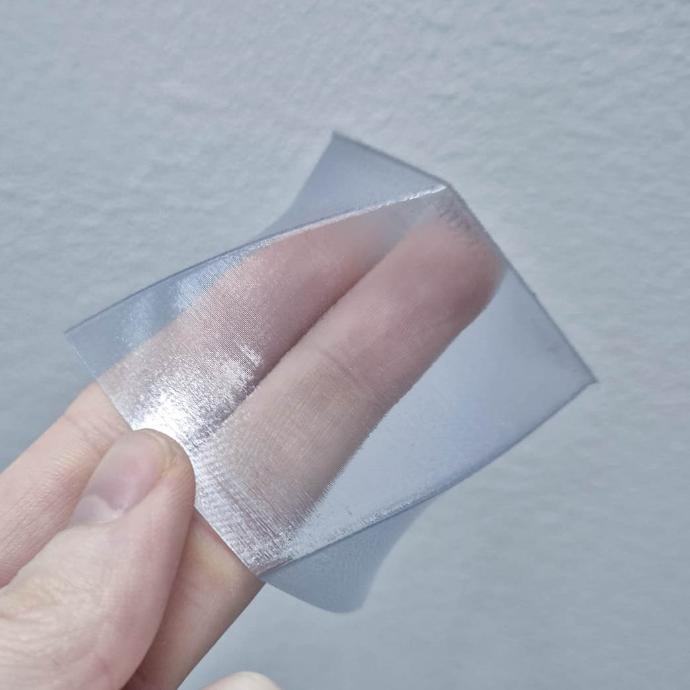
For clearer results, start with wall settings. Fewer perimeters reduce internal boundaries and allow more direct light transmission. Printing in vase mode or using one to two perimeters typically yields the highest clarity. As wall thickness increases, light scattering also increases, producing a softer and more diffused appearance.
A moderate wall thickness often provides the best balance between strength and optical performance.
Infill and Light Diffusion
Infill significantly influences transparency. Dense internal structures introduce multiple surfaces where light refracts, quickly turning a clear print milky or opaque. For maximum clarity, low infill percentages or single-wall designs are recommended.
Controlled infill, however, can be used intentionally to create uniform light diffusion — particularly useful for LED covers and lamp shades.
Extrusion Temperature and Layer Fusion
Extrusion temperature affects how completely layers bond. Printing toward the higher end of the recommended range improves interlayer fusion, reducing visible boundaries and enhancing optical smoothness.
While FDM printing will not produce glass-like transparency, careful tuning of wall count, density, and temperature allows you to move along a spectrum from clearer parts to soft, frosted translucency.
Applications, Compliance and Technical Performance
Transparent PLA combines optical control with reliable mechanical and thermal stability, making it suitable for a wide range of applications.
It is commonly used for LED diffusers, lamp shades, backlit signs, indicator windows, inspection parts, and decorative objects where controlled light transmission is essential. Its tensile strength of 50 MPa and tensile modulus of 3500 MPa (ISO 527) provide sufficient rigidity for thin panels and precision components, while a glass transition temperature and HDT of 60°C ensure stable performance in typical indoor environments.
The material’s consistent melt flow behavior (8 g/10 min at 210°C) supports precise extrusion and detailed geometries.
Food Contact Approval
The raw materials used in FormFutura Transparent PLA are approved for food contact under:
- EU Regulation EC No. 10/2011
- FDA 21 CFR (USA)
- GB 9685-2016 and GB4806.7-2023 (China)
When printed under appropriate hygienic conditions, this makes the filament suitable for regulated food-related applications.
Sustainability
FormFutura Transparent PLA is made from 100% biobased content according to EN16785-1 and ASTM D6866 standards and is certified industrially compostable under EN13432 and ASTM D6400. Combined with EU-based production and recycled second-life PP spools, it provides a responsible material choice without compromising clarity or performance.
Print Settings for Transparent PLA
Transparent PLA prints similarly to standard PLA, but optimizing a few key parameters helps maximize clarity and surface quality.
Recommended starting settings:
- Nozzle temperature: 190–225°C
- Bed temperature: 45–55°C
- Fan speed: 50–100%
- Nozzle diameter: ≥ 0.15 mm
- Drying (if needed): 4–6 hours at 40–50°C
- Adhesion: EasyFix Nr. I or similar
For improved optical blending, printing toward the higher end of the temperature range can enhance layer fusion. However, excessive temperatures may reduce dimensional accuracy, so fine-tuning for your specific printer is recommended.
When aiming for maximum transparency:
- Use fewer perimeters
- Reduce infill
- Ensure consistent extrusion
- Avoid under-extrusion or moisture-related defects
These settings serve as a starting point. Individual printers, hot-ends, and calibration differences may require slight adjustments, especially when printing at high speeds.
Frequently Asked Questions About Transparent PLA
Is Transparent PLA fully clear like glass?
No. Transparent PLA produces semi-optical transparency rather than true glass-like clarity. Because FDM printing builds parts layer by layer, microscopic interfaces influence how light passes through the material. However, wall thickness and temperature adjustments can significantly improve visual clarity.
How do I make PLA more transparent?
Reducing the wall amount and infill has the greatest impact. Printing toward the higher end of the recommended temperature range can also improve layer fusion and optical blending.
Why does my transparent PLA look cloudy?
Cloudiness is typically caused by:
- Too many perimeters
- High infill density
- Under-extrusion
- Moisture in the filament
Drying the filament and reducing internal density often improves clarity.
Is Transparent PLA food safe?
The raw materials used to produce FormFutura Transparent PLA are approved for food contact under EU, FDA, and GB regulations. Final food safety depends on proper printing conditions, hygiene, and post-processing.
Can Transparent PLA handle heat?
Transparent PLA has a glass transition temperature of approximately 60°C. It is suitable for indoor applications but not recommended for high-temperature environments.
Is Transparent PLA recyclable?
Yes. The material is 100% biobased and industrially compostable under EN13432 and ASTM D6400 standards, and it can be recycled where appropriate PLA recycling streams are available.
Conclusion
Transparent PLA offers a unique combination of clarity, tunable light diffusion, and reliable print performance. By adjusting wall thickness, infill density, and extrusion temperature, users can move deliberately between clear and softly frosted finishes — making it one of the most versatile visual materials available for FDM/FFF 3D printing.
Beyond aesthetics, FormFutura Transparent PLA delivers consistent material flow, dimensional accuracy, and stable thermal performance for functional applications such as light components, inspection parts, and protective covers. With food contact approved raw materials and 100% biobased composition, it combines technical capability with responsible material sourcing.
Whether you are developing light-transmitting functional parts, decorative objects, or precision prototypes, Transparent PLA provides a controlled and reliable way to integrate clarity into your 3D printed designs.