
Large-Format Additive Manufacturing (LFAM) continues to transform 3D printing applications such as architecture, furniture production, and industrial design. As applications scale up, the demand for durable, sustainable, and aesthetically appealing materials grows rapidly.
ReForm rPP Wood UV for LFAM is a premium, highly wood-filled recycled polypropylene (rPP) granulate developed specifically for large-scale 3D printing. It combines authentic wood aesthetics with UV resistance and structural durability, making it an ideal solution for both indoor and outdoor LFAM projects.
What Is ReForm rPP Wood UV for LFAM?
ReForm rPP Wood UV for LFAM is a wood-filled recycled polypropylene (rPP) pellet material specifically developed for Large-Format Additive Manufacturing. By combining a high percentage of natural wood fibers with recycled polypropylene, this compound delivers a unique balance between sustainability, structural performance, and aesthetic appeal.
Unlike standard polymer-based LFAM materials, ReForm rPP Wood UV is engineered to provide both visual authenticity and functional durability. The integrated UV stabilization enhances long-term resistance to sunlight exposure, making it suitable for both interior and exterior applications. This allows designers and manufacturers to move beyond purely decorative elements and create large-scale printed components that can withstand real-world environmental conditions.
The wood fiber content plays a central role in the material’s character. It enables the production of parts with a natural wood-like appearance while maintaining the process stability and impact resistance of polypropylene. The result is a large-format 3D printing material that supports expressive design freedom without compromising structural integrity.
In practical terms, ReForm rPP Wood UV allows the creation of large-scale printed objects that feature:
- A natural wood-inspired surface aesthetic
- Adjustable texture depending on nozzle size
- Customizable tonal variation through processing temperature
- Reliable indoor and outdoor durability
This combination makes it a versatile solution for architects, designers, and makers seeking sustainable materials with both visual warmth and technical performance.
Customizable Wood Aesthetics in Large-Format 3D Printing
One of the defining characteristics of ReForm rPP Wood UV for LFAM is its ability to generate authentic wood-like aesthetics directly during the printing process. Rather than relying on secondary finishing techniques such as sanding, staining, or coating, the material allows designers to influence surface character and tonal variation through controlled processing parameters.
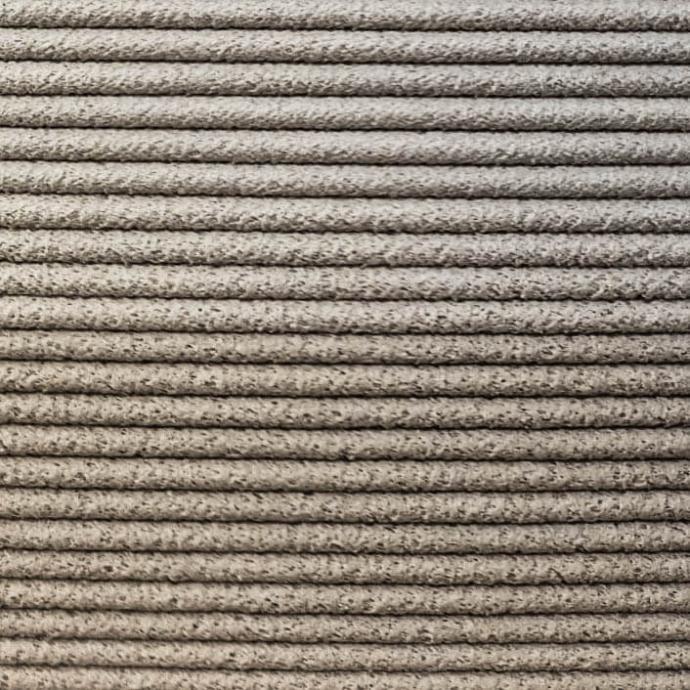
Surface texture can be adjusted by selecting the appropriate nozzle diameter during large-format additive manufacturing. Larger nozzle sizes tend to produce a more pronounced, layered structure, resulting in a textured and rustic appearance that emphasizes the material’s wood-filled composition. Smaller nozzles, on the other hand, create smoother extrusion lines and a more refined surface finish. This flexibility enables designers to tailor the final appearance to match architectural, interior, or product design requirements.
Beyond texture control, extrusion temperature plays a crucial role in defining the visual tone of printed parts. The high wood fiber content responds to thermal variation, allowing subtle shifts in color to occur during processing. Lower extrusion temperatures typically result in lighter wood tones, while higher temperatures deepen the shade due to controlled fiber charring. This thermal aesthetic control allows for nuanced variation within a single print, introducing organic depth and natural-looking gradients that resemble traditional wood materials.
The ability to manipulate texture and color directly during fabrication gives manufacturers greater creative freedom while reducing the need for post-processing steps. However, as with many wood-filled compounds, elevated processing temperatures must be managed carefully, as excessive heat can increase the likelihood of material warpage. Proper parameter optimization ensures consistent results while preserving both structural performance and visual quality.
By integrating aesthetic control into the additive manufacturing process itself, ReForm rPP Wood UV expands the possibilities of large-scale 3D printing—bridging the gap between technical performance and natural material expression.
UV-Stabilized for Indoor and Outdoor Applications
Long-term durability is a fundamental requirement for materials used in large-format additive manufacturing, particularly when printed components are exposed to environmental stress. ReForm rPP Wood UV for LFAM is engineered with integrated UV stabilization to protect the material against degradation caused by prolonged sunlight exposure and fluctuating outdoor conditions.
Ultraviolet radiation can accelerate polymer aging, leading to discoloration, surface embrittlement, and gradual loss of mechanical performance. Wood-filled compounds are especially susceptible if not properly stabilized, as both the polymer matrix and the natural fibers may deteriorate over time. By incorporating dedicated UV stabilizers into the recycled polypropylene base, ReForm rPP Wood UV helps preserve structural integrity, color consistency, and surface quality throughout extended outdoor use.
In addition to UV resistance, polypropylene offers inherent moisture stability. Unlike natural wood, which can absorb water, swell, crack, or rot, the rPP matrix remains dimensionally stable in humid or wet environments. This reduces maintenance requirements and enhances reliability in climates where temperature shifts and seasonal exposure cycles are common.
The result is a wood-filled LFAM material that maintains its mechanical balance and visual appearance even under demanding environmental conditions. By integrating UV protection directly into the compound, ReForm rPP Wood UV ensures predictable performance and long-term stability without the need for additional protective coatings or treatments.
Applications in Large-Format Additive Manufacturing
ReForm rPP Wood UV is particularly well-suited for large-format additive manufacturing projects where scale, texture, and visual presence play a central role. Its wood-filled composition and controlled extrusion behavior make it ideal for creating architectural and furniture-scale components that celebrate the additive process rather than conceal it.
In architectural environments, the material enables the production of large wall panels, curved façade elements, and spatial dividers with pronounced horizontal layer structures that mimic the rhythm of natural wood grain. The visible extrusion lines can be used intentionally as part of the design language, adding depth and shadow play across surfaces at building scale.
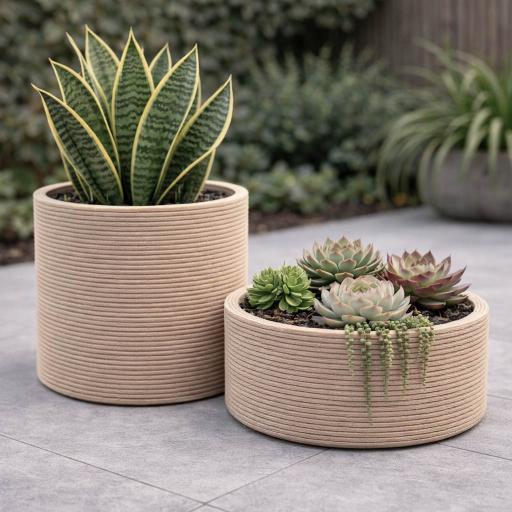
For furniture applications, the compound supports monolithic forms such as curved benches, lounge seating shells, reception desks, and large planters. The stiffness of the material allows for substantial geometries while maintaining clean edges and stable layer bonding. LFAM’s ability to print thick bead widths further enhances the tactile quality of the surface, making texture an integrated design feature rather than a byproduct.
The material also lends itself to expressive, sculptural applications where form and fabrication intersect. Parametric wall features, exhibition installations, public seating modules, and landscape elements can be printed as continuous structures with consistent material character throughout. Designers can leverage nozzle size and extrusion strategy to influence both visual weight and perceived material density.
By combining scalable geometry with wood-inspired surface expression, ReForm rPP Wood UV allows LFAM to move beyond purely functional prototyping into permanent architectural and design-driven applications. The additive process becomes visible, intentional, and integral to the final aesthetic.
Performance Characteristics for Large-Scale 3D Printing
Beyond its visual appeal, ReForm rPP Wood UV delivers a balanced mechanical profile suitable for demanding large-format applications. The material combines the stiffness of wood-filled composites with the impact resistance and process stability of recycled polypropylene, resulting in reliable structural behavior at scale.
With a tensile modulus of approximately 2000 MPa, the compound provides sufficient rigidity for architectural panels, furniture elements, and façade components, while maintaining moderate elongation at break to absorb stress without brittle failure. Its impact resistance further supports use in public or outdoor environments where components may be subject to mechanical loads or incidental contact.
Thermally, the material offers a heat deflection temperature around 92°C, allowing it to maintain dimensional stability in warm environments or under solar exposure. Processing temperatures typically range between 170°C and 200°C, ensuring compatibility with standard LFAM pellet extrusion systems. The controlled melt flow behavior supports consistent extrusion, stable layer bonding, and predictable surface formation during large-format printing.
Moisture content remains low under proper storage conditions, contributing to steady processing performance and reducing the risk of extrusion inconsistencies.
ReForm rPP Wood UV is engineered to provide a balanced combination of stiffness, impact resistance, and thermal stability, ensuring reliable structural performance in large-format printed components.
For full ISO-based material data and detailed testing values, the Technical Data Sheet provides comprehensive specifications and standardized test results.
Conclusion
ReForm rPP Wood UV for LFAM brings together sustainable material sourcing, natural wood-inspired aesthetics, and engineered durability in a single compound tailored for large-format additive manufacturing. By combining recycled polypropylene with high wood fiber content and integrated UV stabilization, it enables designers and manufacturers to produce large-scale components that are both visually distinctive and structurally reliable.
From architectural panels and façade elements to furniture and landscape features, the material supports creative freedom while meeting the performance demands of real-world environments. With controlled surface texture, adjustable tonal variation, and balanced mechanical properties, ReForm rPP Wood UV expands the design possibilities of LFAM beyond purely functional structures toward expressive, durable, and sustainable applications.